

After a Fatal Accident Makes the News: 4 Things a CFI Can Say
When a fatal aviation accident makes the news, student pilots may have questions, concerns, or fears they don't quite know how to express. As a CFI, you don't need to have all the answers. You do need to know how to make room for the conversation. Here are four practical things you can say to help students feel heard, separate facts from speculation, and navigate difficult news with confidence and care.

After the Long Stretch: What Aerial Firefighters Taught Me About Coming Home
Coming home after a long stretch of demanding work isn't always as simple as unpacking your bags and getting back to normal. Lessons from aerial firefighting offer pilots a practical way to pause, notice what they've set aside, and make space for the transition home.

What to Do When an Operator Asks You to Fly a Trip That Doesn’t Match the Paperwork
A trip request doesn’t always match the paperwork. Learn three practical steps pilots can use to identify the mismatch, raise the concern professionally, and know when to pause before accepting a flight.
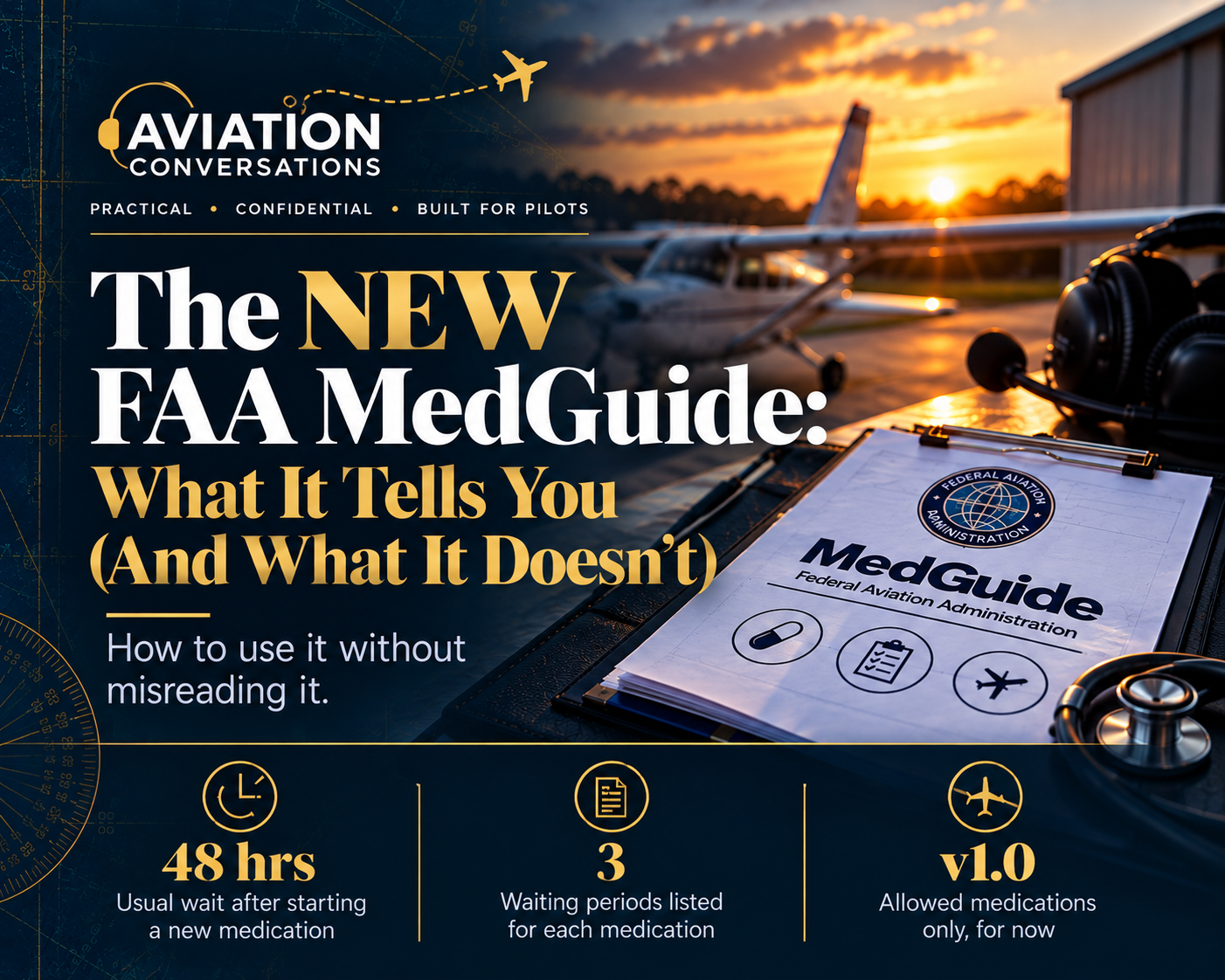
The NEW FAA MedGuide: What It Tells You (And What It Doesn’t)
The FAA’s MedGuide shows which medications it allows and the waits that apply. It does not decide whether you are fit to fly. Here is how to use it without misreading it.

When a CFI Leaves: How Flight Schools Can Keep Students Moving
Your instructors will move on. Your students’ progress doesn’t have to start over when they do. A practical handoff process for flight schools, with a one-page sheet to use this week.

Staying Sharp Under Pressure: What Fatigue Changes Before You Notice
For pilots and flight school leaders: Research shows fatigue can affect performance before you recognize it. Learn how time awake differs from duty time and 4 moves to make before your next flight.


Two Pilot Mental Health Bills Just Passed the Senate: 4 Things Every Pilot Should Know
Two bills could shorten the FAA's mental health wait and publish a list of approved medications. Neither is law yet, and nothing about MedXPress has changed. Here's what pilots should know now.

Three Go-Arounds and a Refused Diversion: Three Ways to Keep Making Decisions Under Pressure
Your backup plan says no, and the next decision won't come. Here's a spoken reset for pilots, a training approach for flight schools, and three ways to break the analysis loop at any certificate level.

One Test Change. Four Moves You Can Make Before October 27.
On October 27 the instrument written loses its printed supplement. Four moves for students, CFIs, and flight school owners to make before the date, none of which require learning anything new about instrument flying.

The NTSB Has Its Timeline. You’re Allowed to Be Rattled on Yours.
Twenty-five years on from 9/11, and eight more gone in five days this month. If it's sitting with you and you haven't told anyone, here's who you can call, what's safe to say, and the one thing about reporting that stops most pilots before they start.

You’ve Done This a Million Times. So Why Does it Fall Apart When Someone’s Watching?
NBAA's Q2 2026 safety analysis put takeoff and landing collisions first. Why performing under observation is a trainable skill, and four ways to train it.

A PATHway Opened. You Still Have to Walk Through It.
The FAA opened a new pathway for pilots managing anxiety and depression. It does not put you on it automatically, and the letter in your own file still decides. Here is the pilot's side of a change most coverage wrote for everybody else.

The Controller Would Rather You Asked.
More than 41 percent of certified controllers are working six day weeks, and pilots can hear it on the frequency. So we guess instead of asking. That trade is not the favor it feels like.

Your Checkride-Ready Students Aren't Losing Skill. They're Losing Confidence.
A student who has been ready since July is not the same student four months later. What the checkride backlog does to confidence, why it lands on your school, and what the schools handling it well are doing differently.


24,000 Pilots Short; And Every One of Them Started as a Nervous Student
The U.S. is short 24,000 pilots in 2026. The real bottleneck isn’t recruiting. It’s how many capable student pilots quit training. Here’s why the mental side of flying matters more than ever.

“I’ve Come This Far”: Why Turning Around Is the Hardest Maneuver
More than two-thirds of weather-related GA accidents are fatal - And the common thread isn't a lack of skill. It's plan continuation bias: The pull to keep going with a plan just because you've already started it. This isn't only a weather problem. It's the same instinct behind Checkride pressure, pushing through a bad lesson, and the fear that turning back means failing. Here's why overriding that pull is a trainable skill, not a personality trait.